
Load you can plan around
Up to 270 kg per evenly loaded shelf supports cartons, crates and heavier stock. The complete stationary rack carries up to 950 kg, depending on its configuration.

Build clear, accessible storage for cartons, bins and bulk goods — then adjust or extend the layout when stock, workflows or available space change.
A useful storage system must carry the goods, keep them visible and adapt without forcing you to replace the whole installation.
Up to 270 kg per evenly loaded shelf supports cartons, crates and heavier stock. The complete stationary rack carries up to 950 kg, depending on its configuration.
Reset shelf heights in 25 mm increments, add levels or connect further bays when the product range and picking process evolve.
Shared posts in continuous runs and reusable components make later expansion more efficient than replacing fixed, single-purpose furniture.
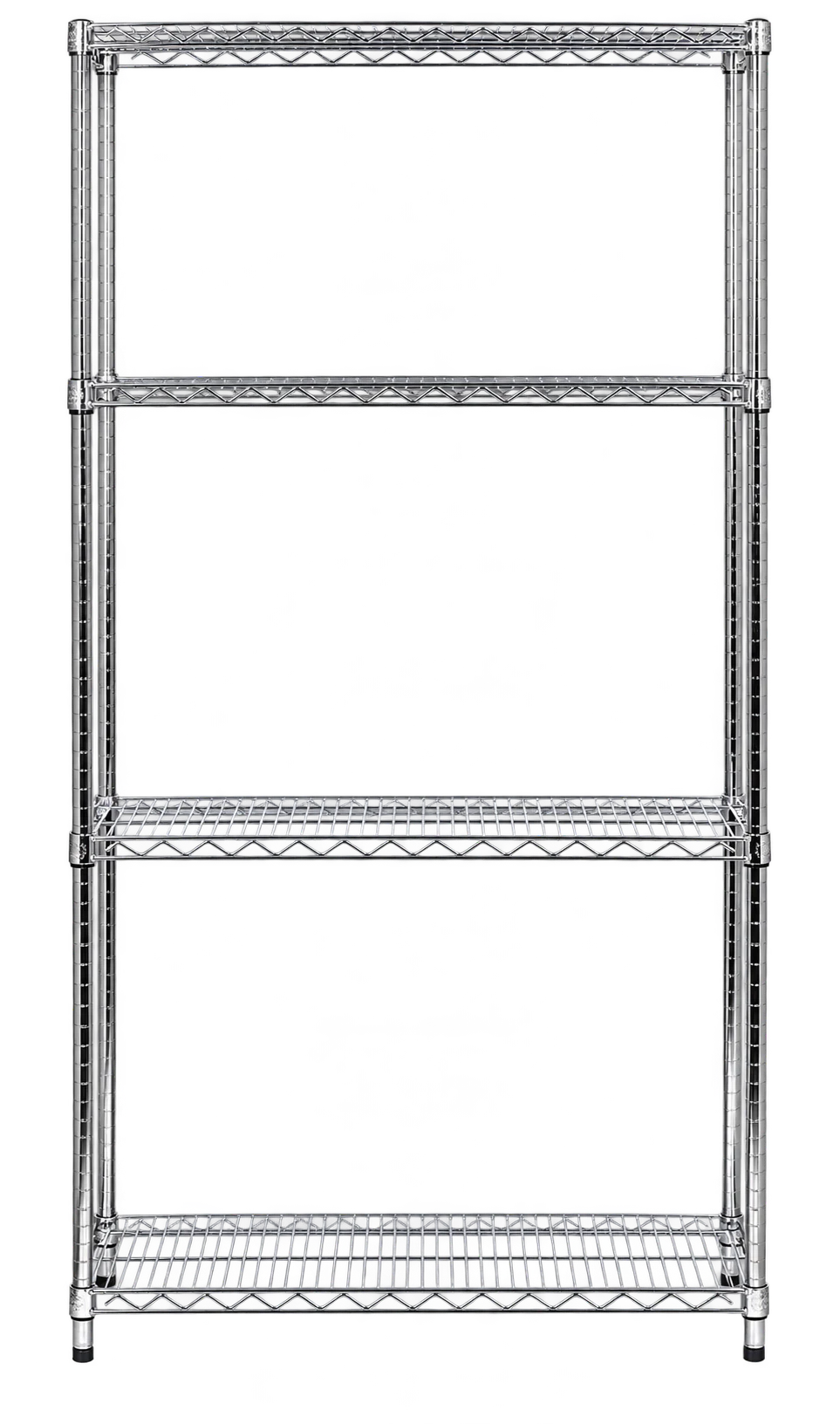
The open wire architecture combines load capacity with direct access and good visibility. It works as a single rack, a continuous run or a correctly specified mobile unit.
 25 mmadjustment lets each level follow the stock, not the other way round.
Start with the room, the stock and the handling method. The same component system can support very different warehouse tasks.
A clear starting point for smaller stockrooms, end-of-run positions and layouts that may be moved later.
Connect adjoining bays on shared posts to use long walls efficiently and reduce the component count of each extension.
Add compatible castors and handles for selected picking or internal-transport tasks. Total capacity is set by the complete mobile configuration and its castors.
The Polish Ultra Power guide provides useful preliminary dimensions. Treat them as planning references and verify the final layout against local rules, fire routes and the equipment used on site.

Run shelving parallel to the main picking route where the room allows. Start from the largest equipment and turning movement that must pass between rows.
These are not universal legal clearances. Confirm the final width with the vehicle specification, risk assessment and regulations applicable to the facility.Measure the cartons, bins or components you store most often. Avoid stock projecting beyond the shelf edge, where it can obstruct the aisle or become unstable.
Useful rule of thumb: allow 5–10 cm more shelf depth than the stored item.Rated components still depend on correct assembly, load distribution and site conditions.
The same modular logic works across different scales. The environment determines which finish and configuration should be used.
 AI AI-generated image
 AI AI-generated image
 AI AI-generated image
Use Chrome in dry interiors. Move to noMICRO where cold, condensation or persistent humidity are part of normal operation.
Choose Chrome for dry interiors without persistent humidity or condensation.
See Chrome shelvingChoose noMICRO for cold rooms, freezers and demanding humid environments.
See noMICRO shelvingEach shelf can carry up to 270 kg when the load is evenly distributed. A complete stationary rack can carry up to 950 kg, depending on its configuration. Mobile-unit capacity is determined separately by the selected castors and complete build.
Yes. You can add shelves, change their position in 25 mm increments and extend a row with adjoining bays. Shared posts make continuous runs an efficient way to grow the installation.
Measure the goods stored most often and choose a shelf that supports them without overhang. Allowing roughly 5–10 cm more depth than the item is a useful early planning rule, but access and handling requirements also matter.
That depends on the height, load, configuration, floor, exposure to impact and the rules applicable to the facility. Tall or heavily loaded runs should be assessed as part of the installation design and anchored where required.
Selected configurations can be converted into mobile units with compatible castors and handles. The safe total load is then limited by the castors and the complete mobile configuration, not only by the shelves.
Chrome is intended for dry interiors. For cold rooms, freezers, condensation or persistent humidity, choose the protected noMICRO system instead.
Share the room dimensions, typical carton or bin sizes, target loads and handling method. We will help turn them into a practical shelving layout.