
Visible stock
Open wire shelves keep labelled packs and bins visible from several sides, helping staff recognise shortages and misplaced items.

Organise medical stock, packaged sterile supplies, clean linen and clinical support materials with a modular system selected for the room, the load and the facility's own procedures.
Shelving cannot create sterility or replace infection-control procedures. It can make stock easier to see, separate and rotate while keeping access and cleaning routes predictable.
Open wire shelves keep labelled packs and bins visible from several sides, helping staff recognise shortages and misplaced items.
Create distinct positions for clean supplies, medicines, linen and housekeeping materials according to the facility's zoning rules.
Move shelf levels in 25 mm increments, add compatible components or rebuild the layout when pack sizes and workflows change.
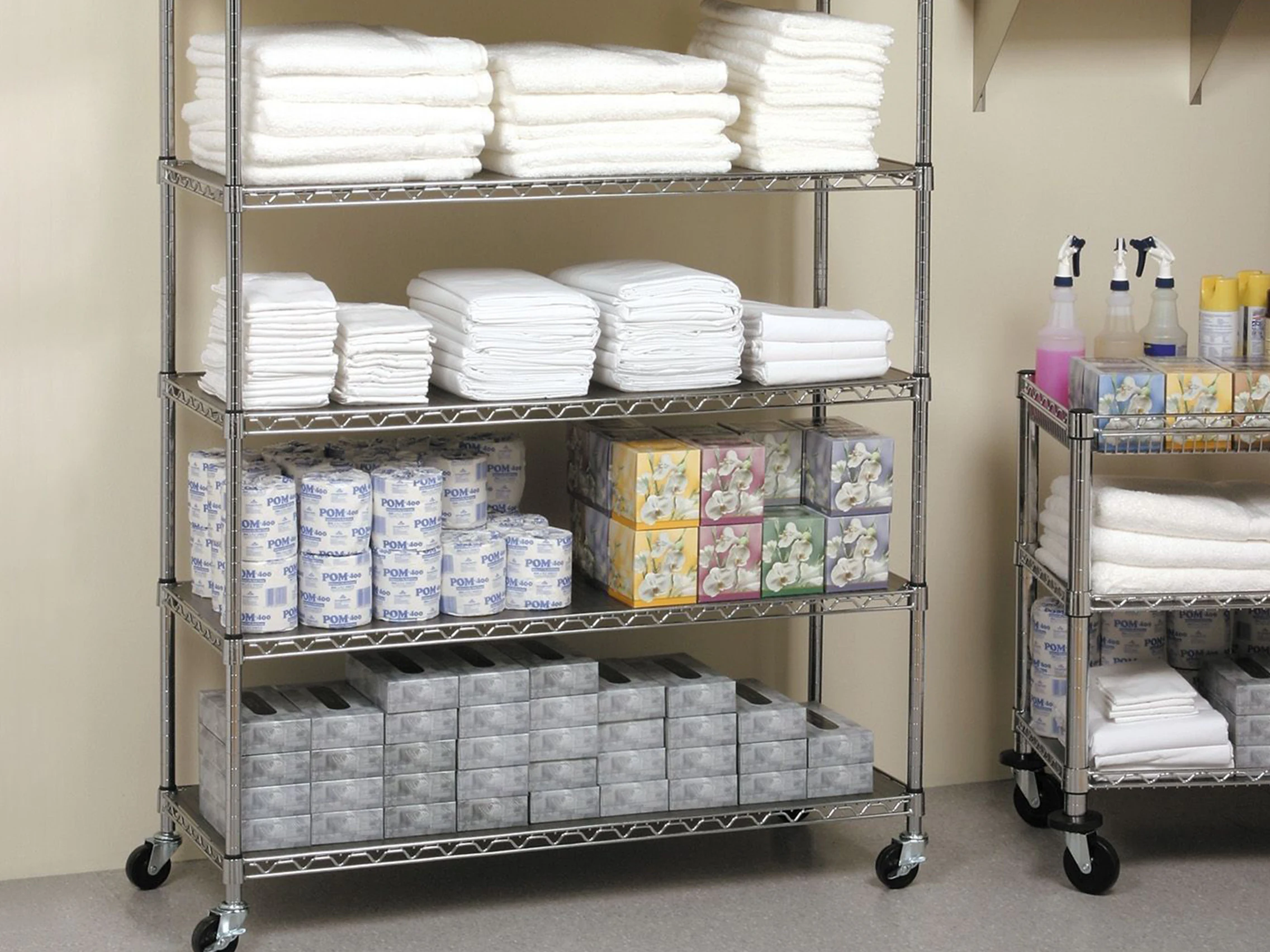
The final configuration should follow the stored product, packaging, access control and environmental conditions — not a generic label such as “medical rack”.
Arrange labelled packs and bins by product group, access frequency and rotation method.
Use open shelving only where the facility's controlled storage conditions and package-protection procedure permit it.
Keep clean items protected and physically separated from used textiles and waste streams.
Follow each product's labelled conditions; shelving does not replace temperature monitoring, refrigeration or access control.
Open shelving may be used in an appropriately controlled store, but packs must remain dry, intact and protected from excess handling, traffic and contamination.
Check packaging for tears, punctures, moisture or other damage before placing supplies into stock.
Keep packs away from wet locations and provide the clearances required by the facility, fire rules and local guidance.
Use clear labels and the facility's approved FIFO or FEFO method so stock remains traceable and waste is reduced.
Limit unnecessary contact and remove any pack whose integrity or storage history is in doubt.
The shelving is storage equipment, not a sterilising device. Suitability for a sterile store must be assessed within the facility's complete infection-control, fire-safety and environmental requirements.
Medicinal products may require defined temperature, humidity, light, security and traceability. These requirements come from product information and the facility's pharmaceutical procedures.
Select the room and system around the conditions stated for the stored medicines; “room temperature” is not a substitute for a defined range.
Temperature-controlled areas require appropriate monitoring, mapped sensor locations and actions for excursions.
Separate quarantined, returned, expired or restricted stock and apply the access controls required for each category.
Important: Ultra Power shelving does not provide cooling, environmental monitoring, pharmaceutical traceability or controlled access on its own.
Dry support rooms and persistently humid or cold areas create different demands. The finish is selected from real exposure conditions and the facility's cleaning procedure.
Chrome provides an open, neutral system for dry interiors without persistent humidity or condensation. Cleaning compatibility must follow the product care instructions.
Explore Chrome shelving →noMICRO combines a protective zinc layer with a green polyester coating containing silver-ion technology. It is intended for cold, humid and hygiene-sensitive storage areas.
Explore noMICRO shelving →The silver-ion coating supports hygienic storage conditions by helping inhibit bacterial growth on the coated surface. It complements regular cleaning and disinfection but does not replace them.
Compatible castors and handles can turn selected racks into internal transport units for linen or packaged supplies. Mobile capacity depends on the castors and complete configuration, not on the 950 kg stationary-rack value.
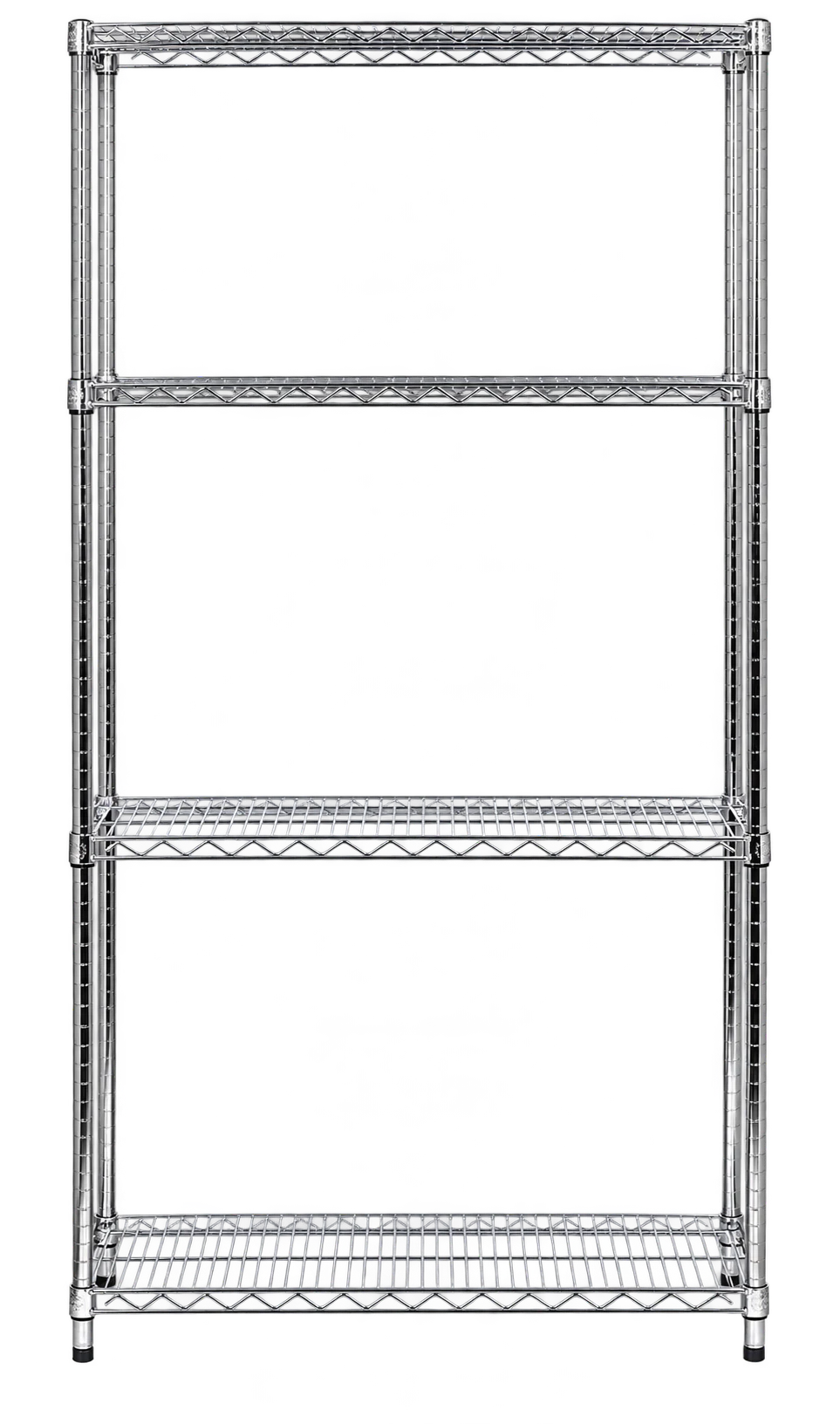 Mobile capacity follows the castors and complete configuration.
A useful healthcare storage plan combines product dimensions with controlled workflows. These questions should be resolved before rack sizes are selected.
Record package sizes, weights, quantities, handling bins and any special storage statement.
Define staff access, issue frequency, replenishment direction and stock-status separation.
Check temperature, humidity, condensation, cleaning agents and monitoring requirements.
Map clean and used flows, trolleys, thresholds, doors and the space needed to clean around the installation.
No. The coating contains silver-ion technology that supports inhibition of bacterial growth on the coated surface. It does not sterilise products or replace cleaning, disinfection and infection-control procedures.
They may be stored on open shelving where the facility's controlled-store procedure allows it. Packages must remain dry, intact and protected from contamination and unnecessary handling.
The system can organise packaged medicines, but the facility must provide the temperature, humidity, light, security, monitoring and traceability required by the product and applicable procedures.
Chrome is intended for dry interiors. Choose noMICRO for cold rooms, condensation or persistent humidity, subject to the facility's cleaning and compatibility assessment.
Each shelf can carry up to 270 kg when evenly loaded. A complete stationary rack can carry up to 950 kg depending on its configuration. Mobile capacity is assessed separately.
Yes. Shelf levels can be repositioned in 25 mm increments without bolts. The rack must be unloaded and adjusted according to the assembly instructions before returning to service.
Share package dimensions, target loads, storage conditions, access rules and the movement route. We will help select a practical layout and the appropriate Ultra Power finish.

